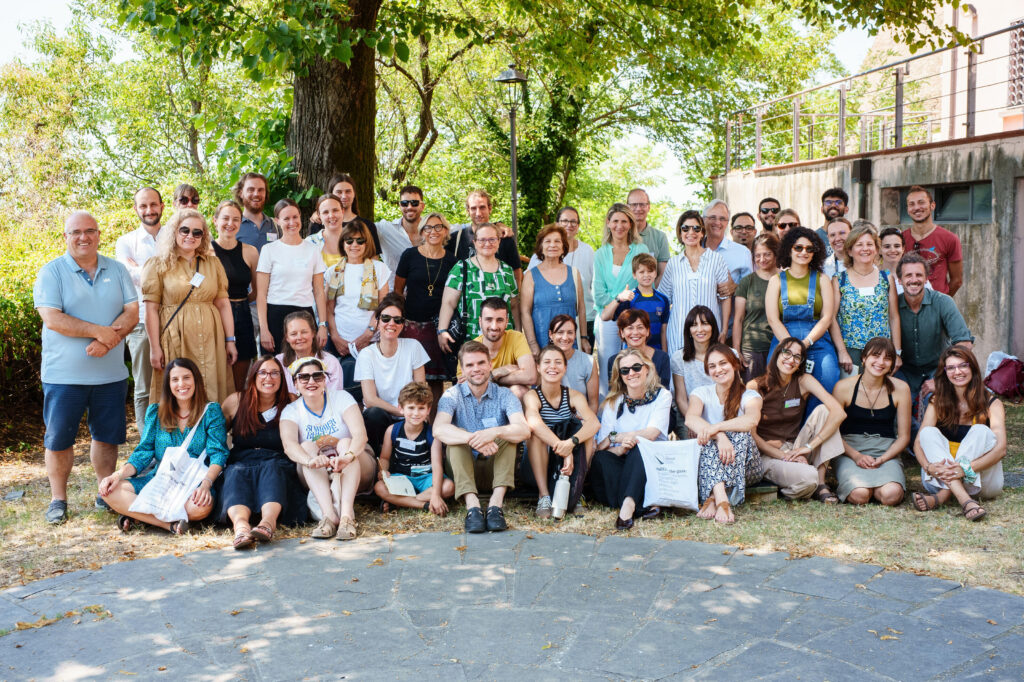
On 20 October 2026, teachers, researchers and educational partners from the FEDORAS community gathered online for the first International Debriefing Lab to explore these questions together. Four months had passed since the first FEDORAS Summer School in Bertinoro, Italy, where participants from different European countries had worked together on open schooling, educational futures and assessment as collective inquiry.
The Debriefing Lab offered an opportunity to reconnect and explore how that experience was continuing to evolve. It brought together the Summer School participants and their colleagues from the wider FEDORAS community, creating a space to share what was emerging across different educational contexts.
Through plenary conversations and two rounds of small-group discussions, the meeting followed the paths that ideas and experiences had taken since Bertinoro, from memories that continued to resonate to classroom experiments, new collaborations and questions for the next iteration of the Academy.
What stays with us?
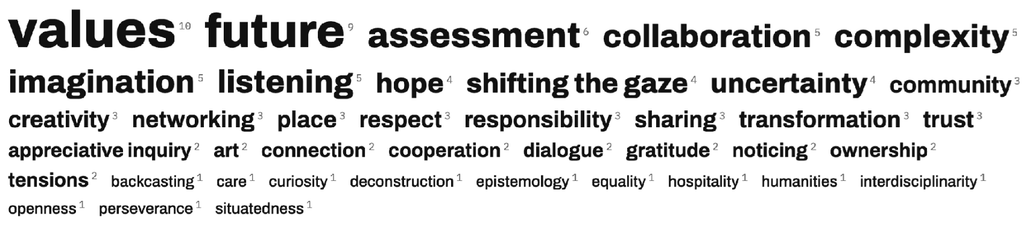
The opening reflection brought back some of the experiences that gave Bertinoro its particular character: sharing educational practices, exploring questions together, experimenting with collective imagination, and making room for different perspectives. Together, these experiences had created space for relationships, reflection and new ways of thinking about education. Values, futures, collaboration, complexity, imagination, listening, hope, shifting the gaze, and uncertainty were among the keywords participants had used to describe an experience.
The first small-group conversations explored what had stayed with people in the months since: the encounters that continued to resonate, the ideas that were taking on new meanings in their everyday work, and the questions that remained open.
The opportunity to engage with people from different countries, disciplines and educational backgrounds had left a lasting impression. Informal conversations, encounters with unfamiliar perspectives, and time spent exploring questions together contributed to a sense of belonging that continued beyond Bertinoro. In some local open schooling networks, discussions inspired by the Summer School were still taking place months later.
Listening remained central to the reflections, closely connected to the importance of creating space for different perspectives to emerge and develop. The freedom to explore ideas, express disagreements and engage with complexity had been a meaningful part of the experience in Bertinoro. It also raised questions about how the pressure to reach shared conclusions can sometimes lead groups to overlook differences and tensions that deserve further exploration.
These reflections brought attention to the importance of time, trust and openness for collective learning, and to the challenge of sustaining these conditions amid the demands of everyday school life. This attention to relationships was finding expression in everyday classroom practices. Inspired by an approach shared in Bertinoro that explored the relationship between emotions and learning, one teacher had invited students to write about their expectations for the school year and the relationship they hoped to develop with their teacher. Another had begun asking students how they felt before and after lessons, experimenting with ways to give greater attention to their emotional experiences.
Art, science and futures thinking offered further possibilities for experimentation. A few teachers described introducing more theatre and collaborative work, and exploring how creative approaches could help students engage with complex issues, including climate change, and imagine possible futures. The practical challenges of making space within existing curricula, responding to students’ diverse needs and finding opportunities to collaborate were closely connected to these emerging ideas.
A particularly meaningful concern came into focus in the plenary: the need for more opportunities to exchange concrete teaching practices. The international encounters had stimulated curiosity about how colleagues worked in their schools, what activities they were experimenting with and how educational ideas were being adapted to different contexts. Sharing these experiences, including the questions and difficulties they raised, emerged as an important way to keep learning from one another.
Ideas taking shape across contexts
The second round of breakout discussions brought participants into new groups, connecting different experiences and perspectives from across the FEDORAS community. The conversation turned towards what was already developing in schools and Open Schooling Networks, and what might help these initiatives grow.
One recurring theme was futures thinking, particularly its potential to help young people imagine desirable futures and recognise their capacity to contribute to them.
In Norway, for example, a science education project using comics to explore climate change was being developed further through ideas encountered within FEDORAS. Students had previously imagined the consequences of environmental change, often depicting futures dominated by crisis and loss. The experience of collectively imagining desirable futures during the Summer School was inspiring teachers to extend the activity, encouraging students to explore alternative possibilities and reflect on how present actions might help shape them.
In another testimony, futures thinking was also being introduced to students approaching the end of secondary school. Exploring probable and desirable futures creates a space to reflect on personal aspirations, available resources, and choices at a time often marked by uncertainty.
Through these exchanges, a broader educational question came into focus: how can schools help young people develop a sense of agency and see themselves as active contributors to futures?
These experiences also highlighted the value of the exchange across the FEDORAS network. Norwegian teachers were drawing inspiration from work shared by Greek colleagues, while experiences from Norway were opening new possibilities for the Greek team. These connections were helping teachers reconsider and develop their own projects, drawing on the experiences of others while adapting ideas to their educational contexts.
Assessment was another important thread running through the conversations.
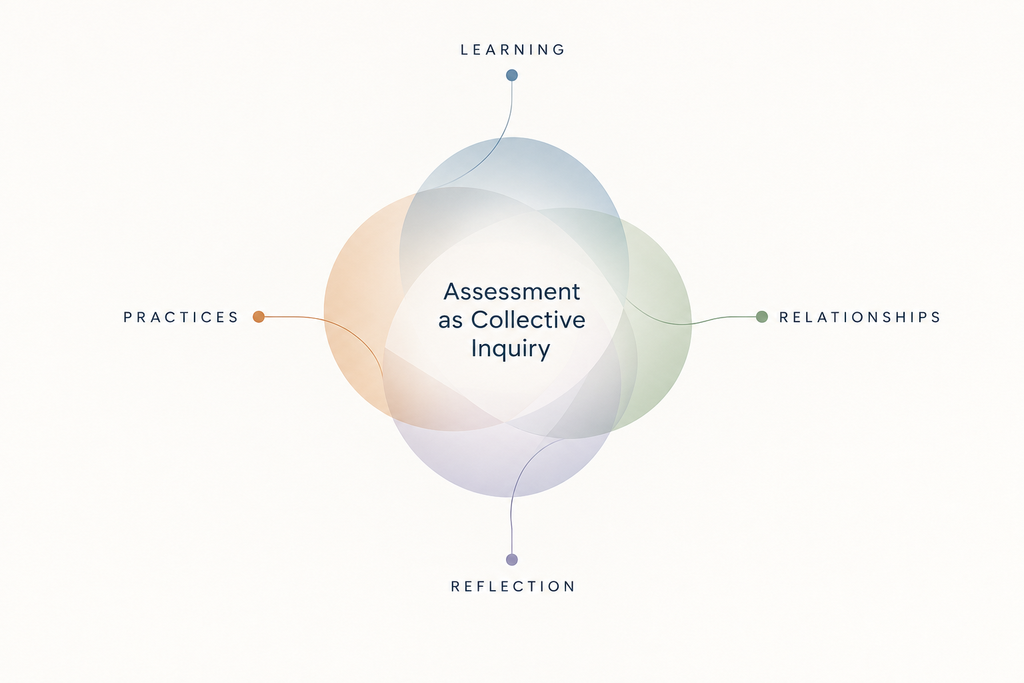
Within FEDORAS, assessment is explored as a process of collective inquiry, through which educators, learners and educational communities seek to recognise and understand changes in learning, relationships and practices.
The discussions raised questions about what schools value and how different dimensions of learning can be recognised. Students’ emotions, participation, creativity and relationships were considered alongside cognitive development and established assessment practices.
In Finland, ongoing curriculum revision processes were creating opportunities to reflect on the purposes of assessment and the educational values underlying them. Across other contexts, questions emerged about how broader approaches could be developed within the practical conditions of school life, including limited time, large classes and institutional requirements.
The question of how to involve others in developing educational initiatives also emerged. One teacher wondered how to develop new initiatives when they were the only person in their school directly involved in FEDORAS. Another shared how a collaboration that had started with two teachers had gradually expanded into a wider network through conversations with colleagues and invitations to participate.
This experience showed how an initiative can gradually gain support within a school. Partnerships with researchers, artists and other educational actors offered further opportunities for collaboration, experimentation and reflection, while the time and resources available in different contexts remained important conditions for sustaining such work.
Across the groups, initiatives were taking shape at different rhythms. Some participants described projects already underway, while others were exploring possibilities or reconsidering how they approached familiar educational questions.
These different experiences brought forward questions for the next FEDORAS iteration: how to sustain experimentation, learn from practices developed in different contexts, and recognise the changes that are gradually taking place.
Recognising learning as it unfolds
The first International Debriefing Lab marked the completion of FEDORAS’s first cycle of activities, which brought the community together through the International Change Lab, the Summer School in Bertinoro and this final opportunity for collective reflection. Across these encounters, different educational experiences, perspectives and aspirations have contributed to developing a shared understanding of open schooling and the possibilities for educational change.
The Debriefing Lab brought into focus how ideas and relationships developed through the Academy were continuing to evolve within schools and local Open Schooling Networks. The experiences shared also raised questions about how to follow these developments over time, recognise emerging changes and understand the conditions that support them.
These insights provide a milestone for the next FEDORAS cycle, which will deepen the Academy’s work on assessment as collective inquiry. Building on the experiences and questions emerging from the first iteration, the focus will turn towards how educational communities can collectively notice, understand and value changes in learning, relationships and practices.
The first cycle leaves FEDORAS with a growing body of shared experiences, new connections across educational contexts and questions that will continue to inform its development. As the Academy enters its next phase, these become resources for further exploration, collaboration and collective learning.
On Tuesday, 7 July 2026, the FEDORAS project held its first symposium, “Regenerating Science Education for a Sustainable World: Interdisciplinarity, New Languages, and Futures Thinking...
From 22 to 26 June 2026, the first FEDORAS Teacher Academy Summer School took place at the University Residential Centre of Bertinoro (CEUB), Italy. The...
On the 10th of July, the Italian Institute for the Future (IIF), one of the leading Italian institutions focusing on futures studies and futures literacy,...
On 28 April 2026, teachers, researchers, school leaders and project partners from FEDORAS and the five Open Schooling Networks gathered for the first International Change...