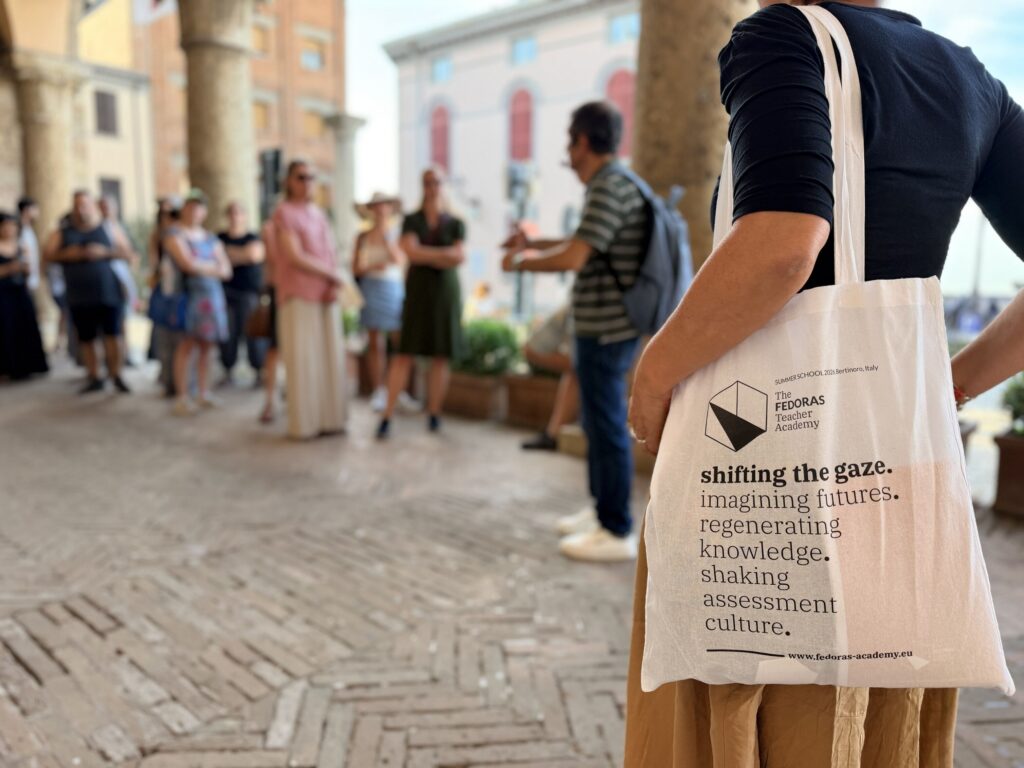
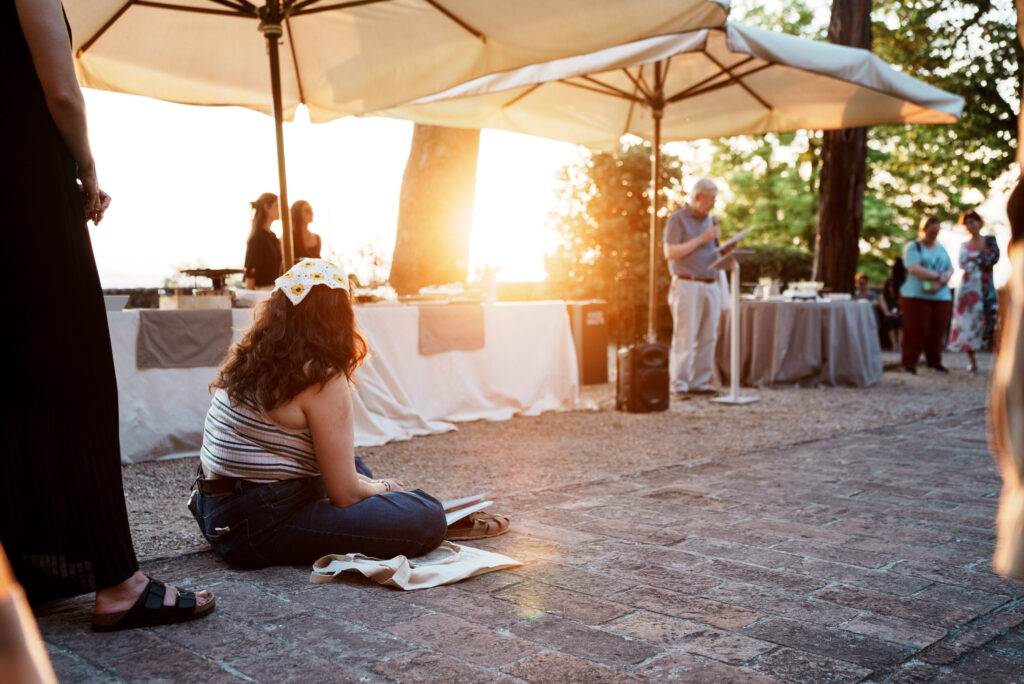
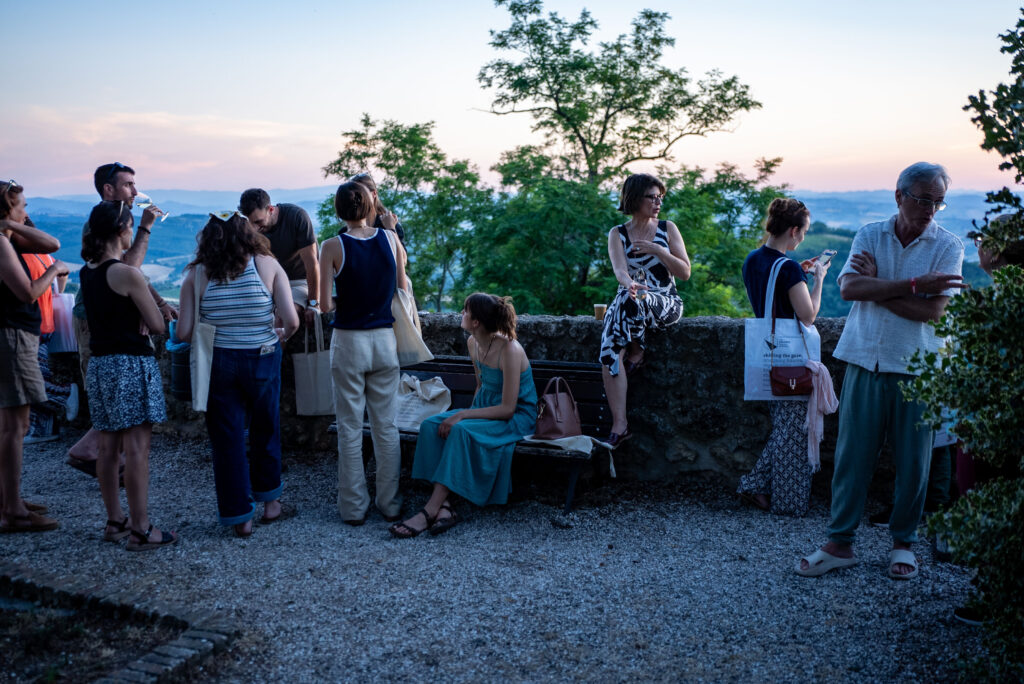
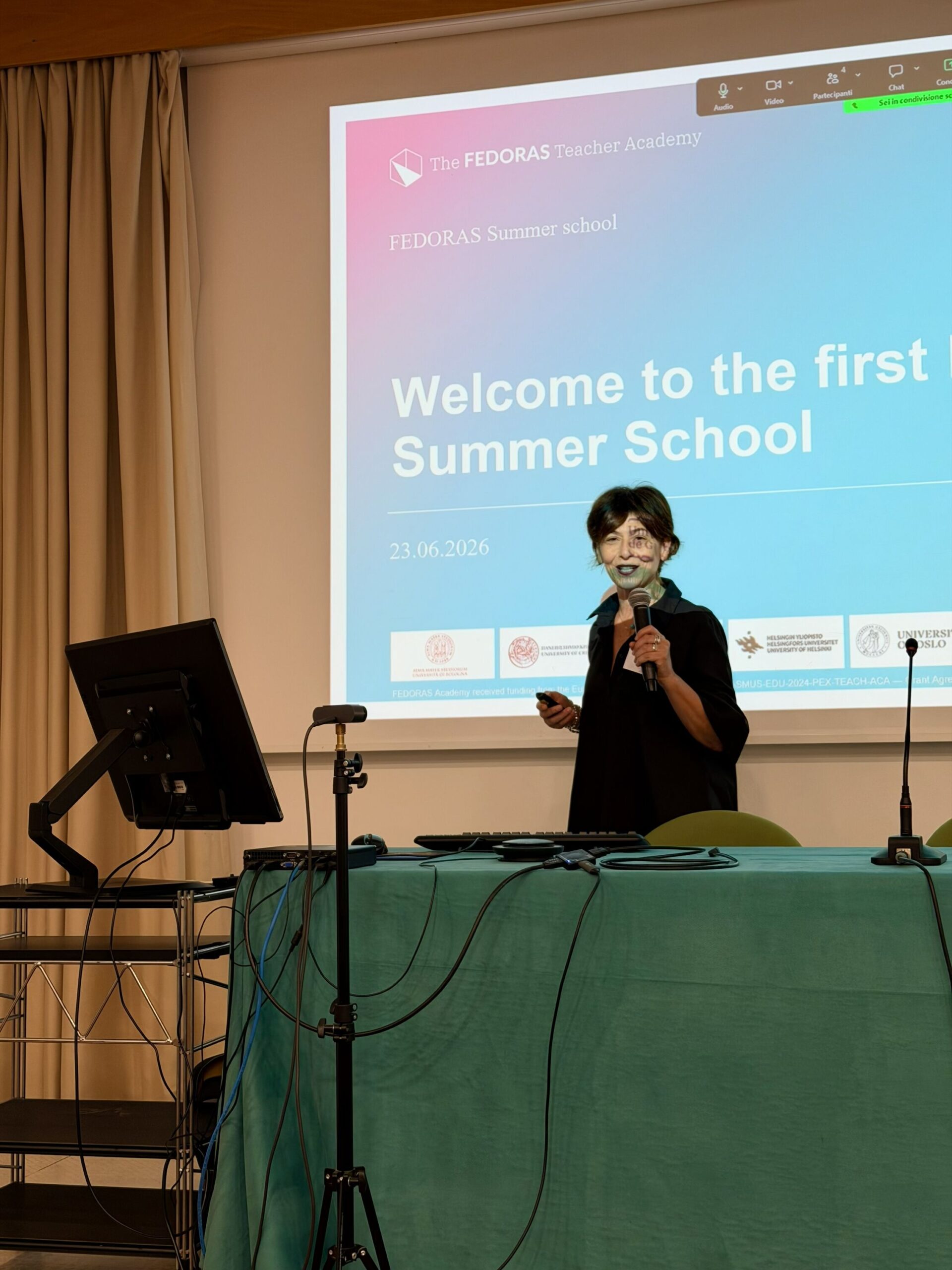
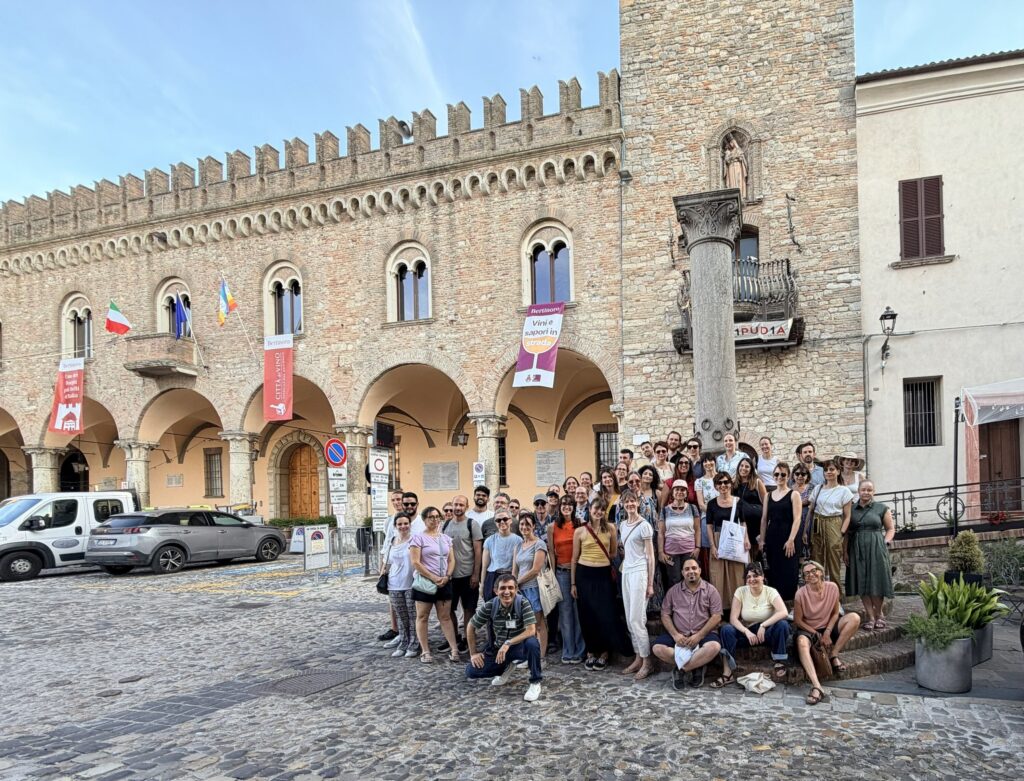
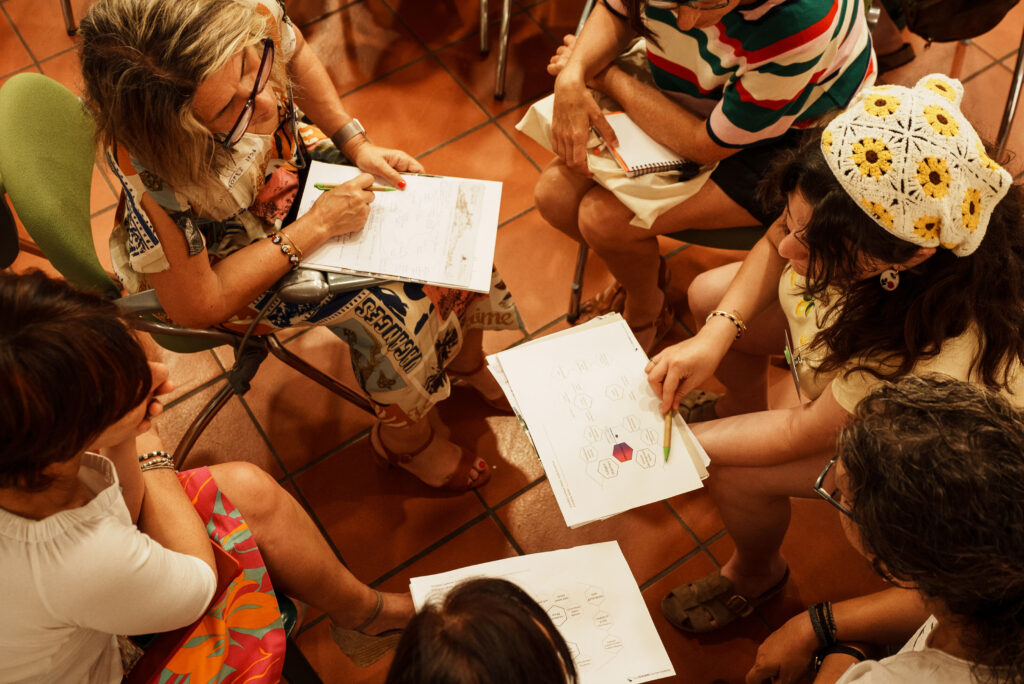
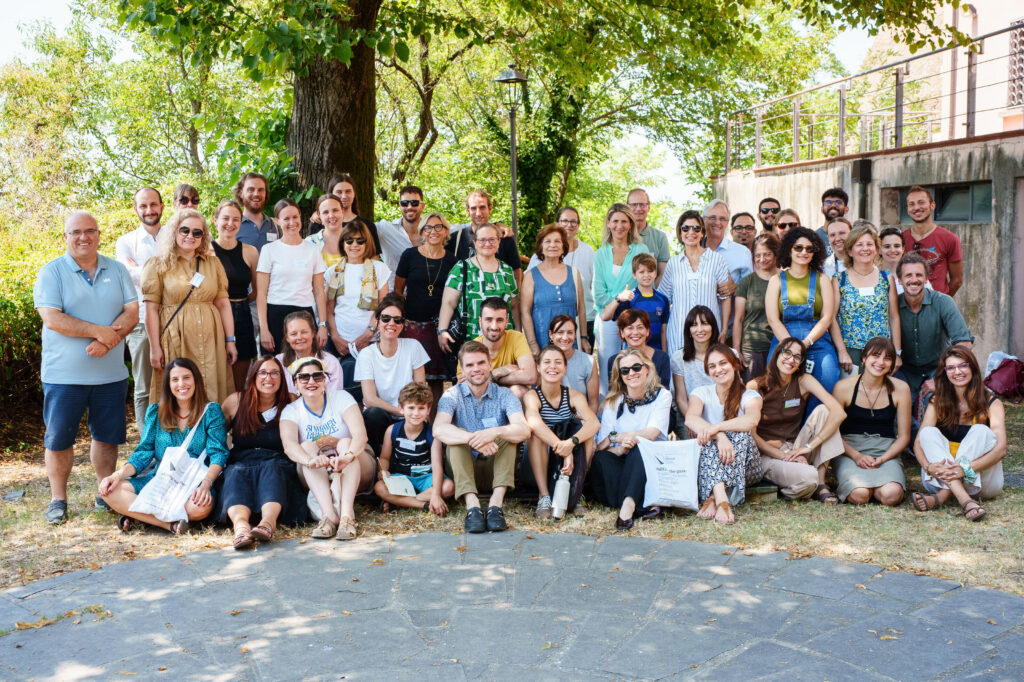
From 22 to 26 June 2026, the first FEDORAS Teacher Academy Summer School took place at the University Residential Centre of Bertinoro (CEUB), Italy.
The five-day event brought together teachers from diverse educational and disciplinary backgrounds representing the five Open Schooling Networks involved in the project (Finland, Greece, Italy, Norway and Spain), alongside teacher educators, researchers and experts from the project’s partner institutions.
The summer school has been centred around a specific motto, bearing the core ideas of the FEDORAS project:
Shifting the Gaze.
Imagining Futures.
Regenerating Knowledge.
Shaking Assessment Culture.
Following this motto, the school’s main idea was to offer a space where participants could explore the role of schools in contemporary society and develop an assessment culture capable of recognising forms of learning that often remain invisible.
Photo by Angela Morelli
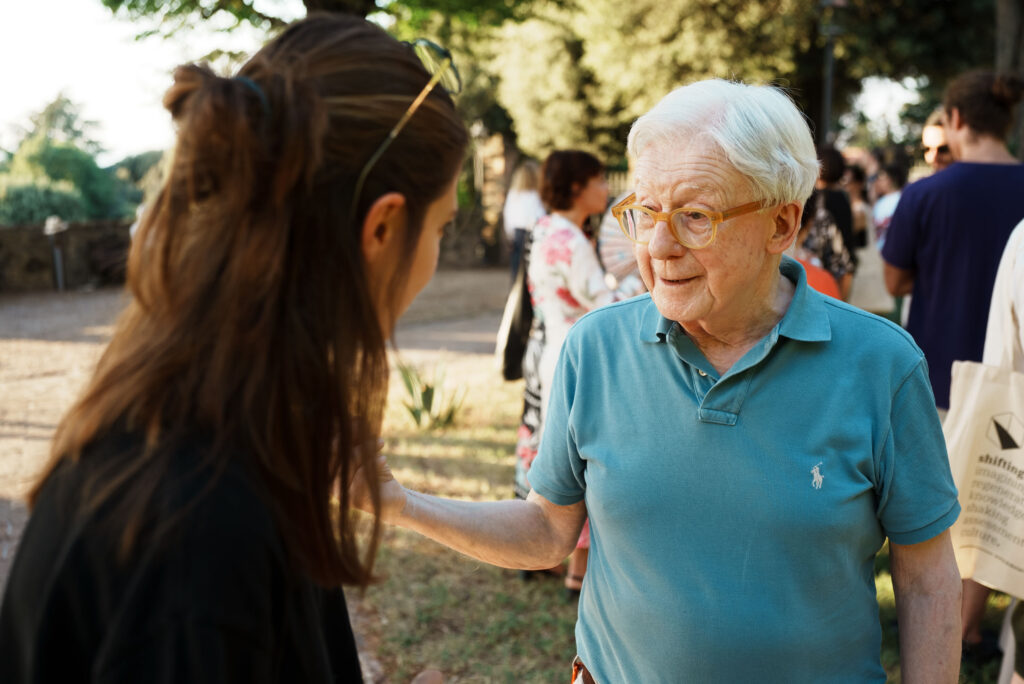
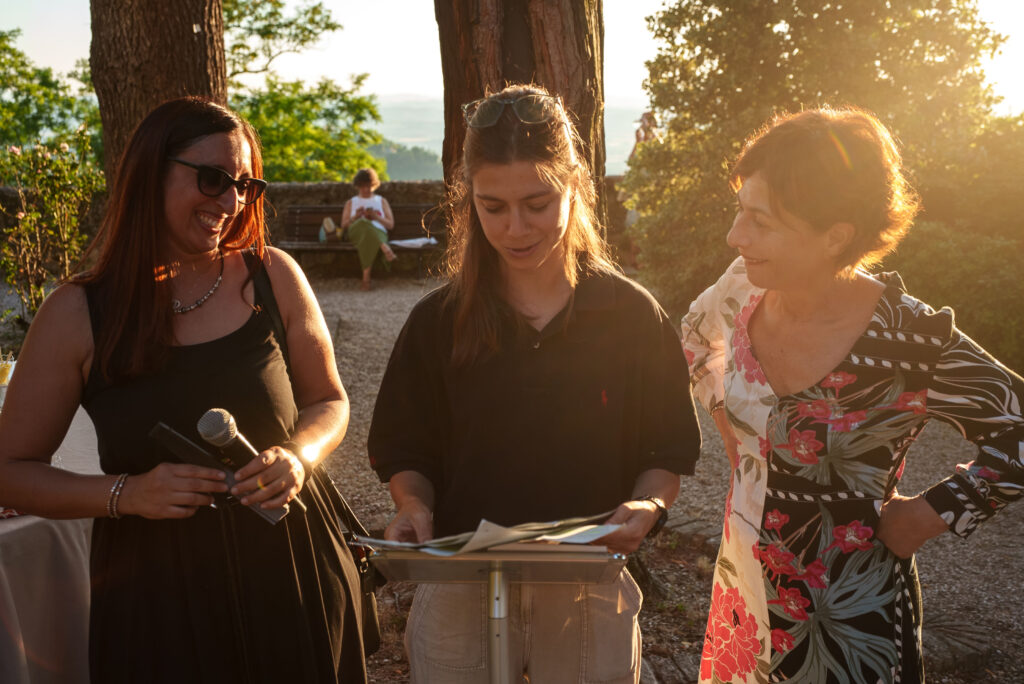
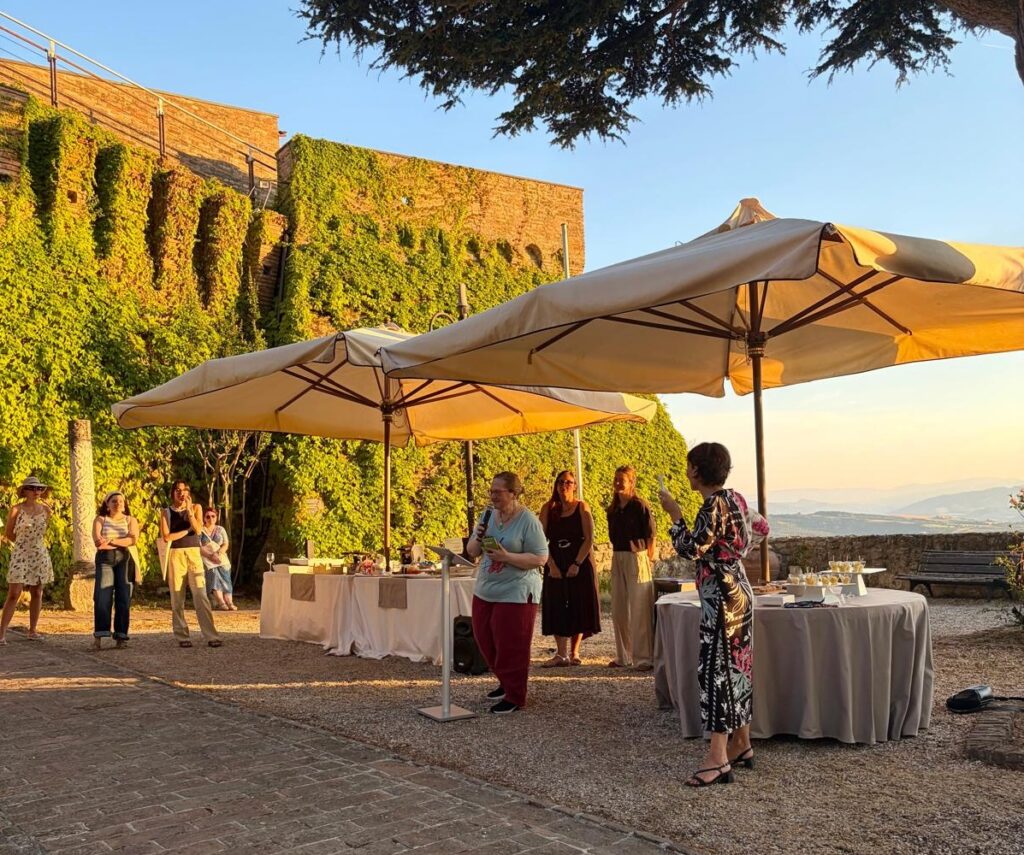
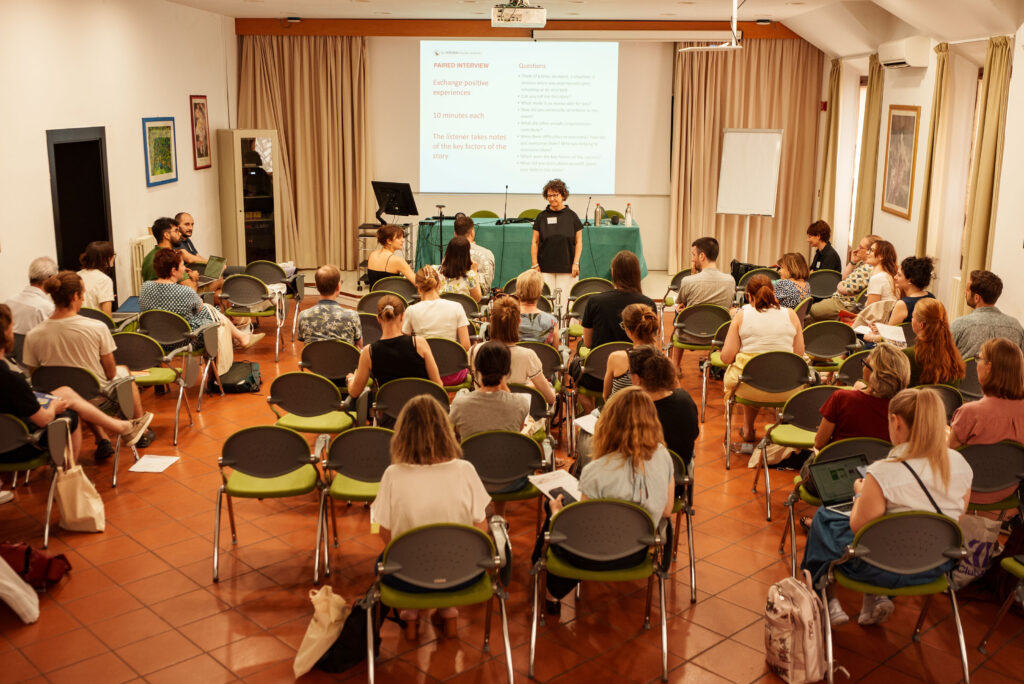
Throughout the week, Open-schooling took shape through lectures, workshops, collaborative design, shared walks and conversations with the Bertinoro community. Keynote speakers, researchers, teachers and local actors—including the town’s former mayor and current Councillor for Culture, as well as local guides—brought diverse experiences and forms of knowledge to the same conversation. Their contributions gradually gave substance to the ideas guiding the Summer School.
Opening and welcome: between complexity and institutional changes
Three main moments marked the opening of the summer school. First, we attended a common reading session of the book Explain the World, Create Worlds by Gianni Zanarini (edited by format bo), former Professor of Physics at the University of Bologna. It was introduced by Sibel Erduran (Professor at the University of Oxford) and interpreted by Giulia Tasqueir (Associate Professor at the University of Bologna) and Maria Cambil (teacher and actress).
Photo by Alfredo JornetPhoto by Alfredo Jornet
Moving across science, history, philosophy and the humanities, her presentation placed curiosity and imagination at the heart of education. Knowledge develops through questions, perception and engagement with the complexity of the world. The week began with a first orientation: learning depends on the quality of the attention we bring to what surrounds us.
Photo by Alfredo JornetPhoto by Alfredo Jornet
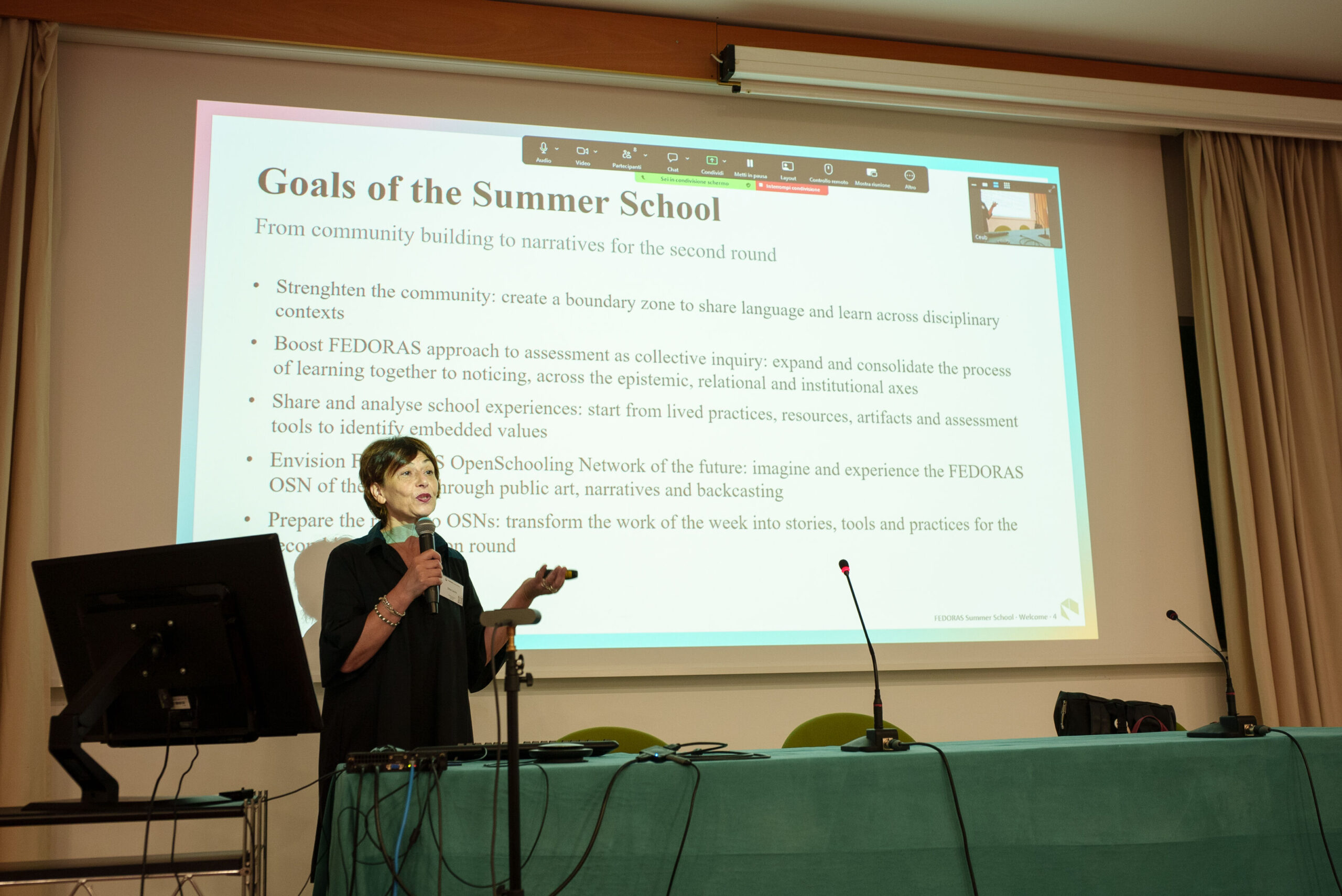
The second one was given by Olivia Levrini (Professor at the University of Bologna and FEDORAS PI), in which she positioned the summer school as a common space where different educational traditions, languages and experiences could meet while preserving the richness of their differences. After the introduction of the project, the main theme around which the summer school has been organised, assessment, was positioned as one of the practices in which educational change meets its strongest obstacles, because it brings into question what a community recognises and values as learning and transformation. Collective inquiry was introduced as the perspective from which the week would approach this issue, beginning with lived school practices and considering how learning and change take shape through knowledge, relationships and institutional dimensions. Together, these elements outlined Open-schooling as a living repertoire: a shared orientation grounded in practice and capable of evolving with the networks themselves.
This openness also shaped the way the week was to be inhabited: politically and poetically.
In her words:
“We imagined to inhabit this common space both politically and poetically. Politically, because in imagining our futures, Open Schooling Networks we also imagine what kind of world we want to contribute to. Poetically, because imagination, sensitivity, metaphors, bodies, places and emotions are not decorative elements: they are part of how new possibilities emerge.”
Participants were also invited to rethink their relationship with time: to suspend, for a while, the pressures of linearity, prediction and efficiency, allowing minds and bodies to breathe, feel the place and become receptive to other ways of inhabiting time, space and relationships. Open-schooling entered the week as a common culture to be shaped from within and remain open to being changed by the experience unfolding in Bertinoro.
Photo by Angela MorelliPhoto by Alfredo Jornet
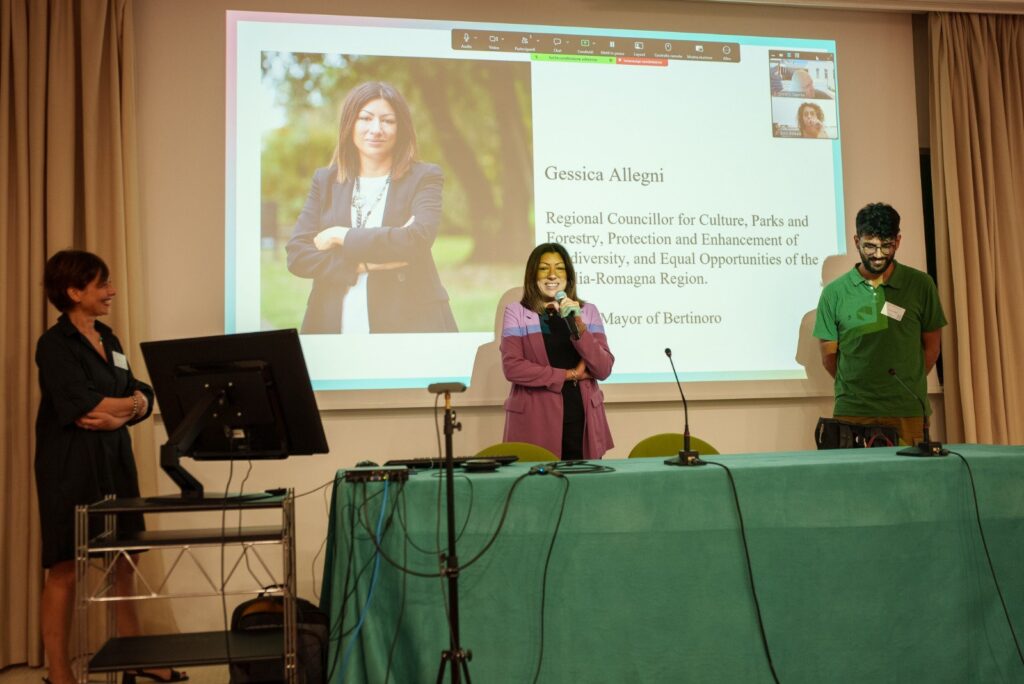
This collective frame acquired a civic dimension through the third main contribution of Gessica Allegni, former mayor of Bertinoro and current Regional Councillor for Culture. In her presentation, she connected education to the democratic life and future of the community:
“Teaching is one of the great democratic infrastructures of our society, together with culture. It has to do with our future, and with the future of our girls and boys.”
Festivals, public spaces, artistic practices and shared memories showed how education is woven into the everyday life of a town. Storytelling formed part of this civic work:
“These moments show us that telling stories is good for us. It helps us build a shared and collective identity. Storytelling is educational, because through stories we create bridges and reconstruct our identity together.”
Through these stories, Open-schooling took the form of a responsibility shared across institutions, families, cultural spaces, associations and citizens. Allegni gave this idea its clearest formulation:
“Speaking about a ‘comunità educante’ and participatory processes means exactly this: recognising that education does not belong only to schools. It belongs to the whole community. It belongs to institutions, families, cultural spaces, associations, and to every person who chooses to take part in the life of others.”
Photo by Alfredo Jornet
Shaking the assessment culture with Appreciative Inquiry
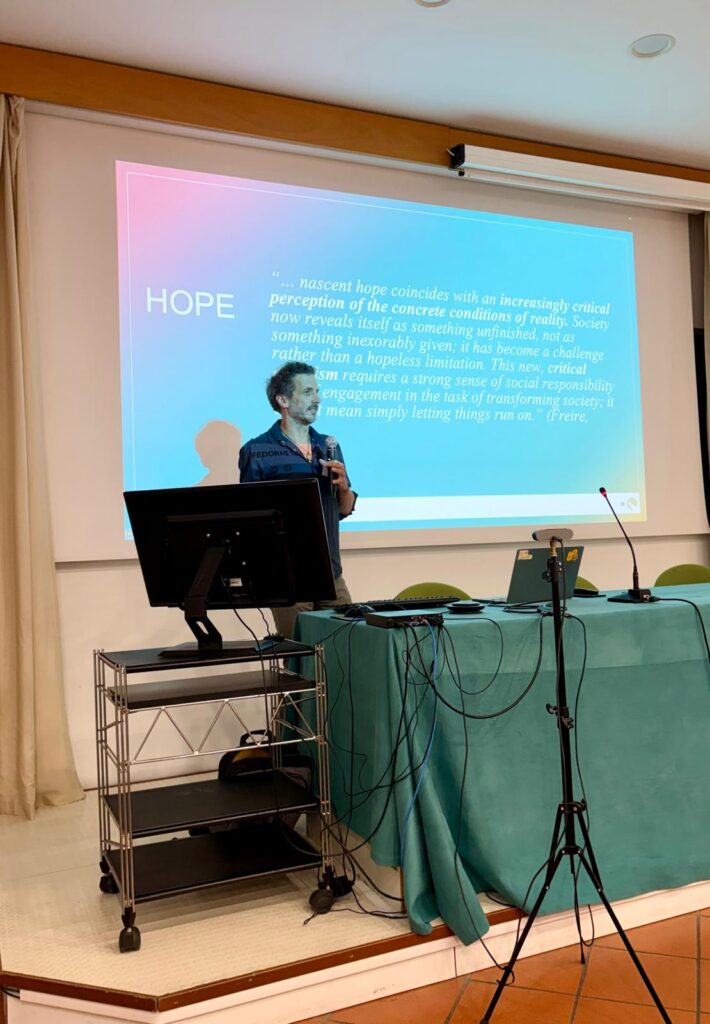
This civic and relational understanding raised another question: how could change be recognised while it was happening? Alfredo Jornet (Researcher at the University of Girona) approached this question from a view of schools as participants in social transformation. At the basis of this view lay Freire’s idea of hope: a critical orientation grounded in the recognition that reality remains unfinished and therefore open to collective responsibility and action.
“Nascent hope coincides with an increasingly critical perception of the concrete conditions of reality. Society now reveals itself as something unfinished, not as something inexorably given; it has become a challenge rather than a hopeless limitation. This new, critical optimism requires a strong sense of social responsibility and of engagement in the task of transforming society; it cannot mean simply letting things run on.” (Freire, Education for Critical Consciousness, 1973)
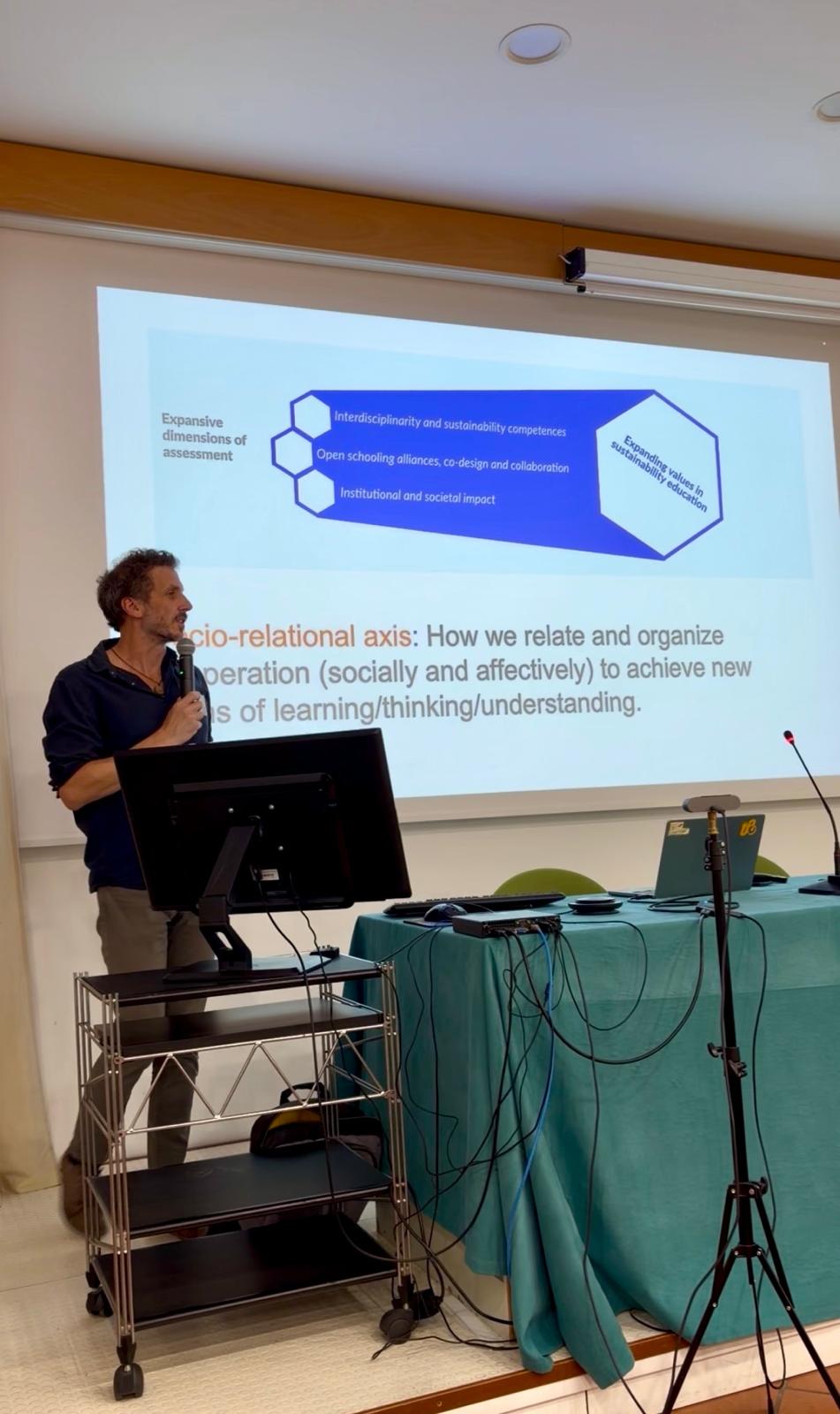
Recognising reality as unfinished gave assessment its place within Open-schooling: when schools seek to initiate social change, the community needs ways of understanding how that change is taking form. Assessment could therefore be understood as part of Open-schooling in the making—a way of following transformations across the knowledge and forms of understanding being developed, the relationships and forms of collaboration taking shape, and the institutional conditions capable of sustaining change within and outside school. In this vision, “learning to notice together” pointed towards a collective practice of shared sense-making through which educators, students, researchers and other members of the community learn to identify, interpret and value transformations as they emerge.
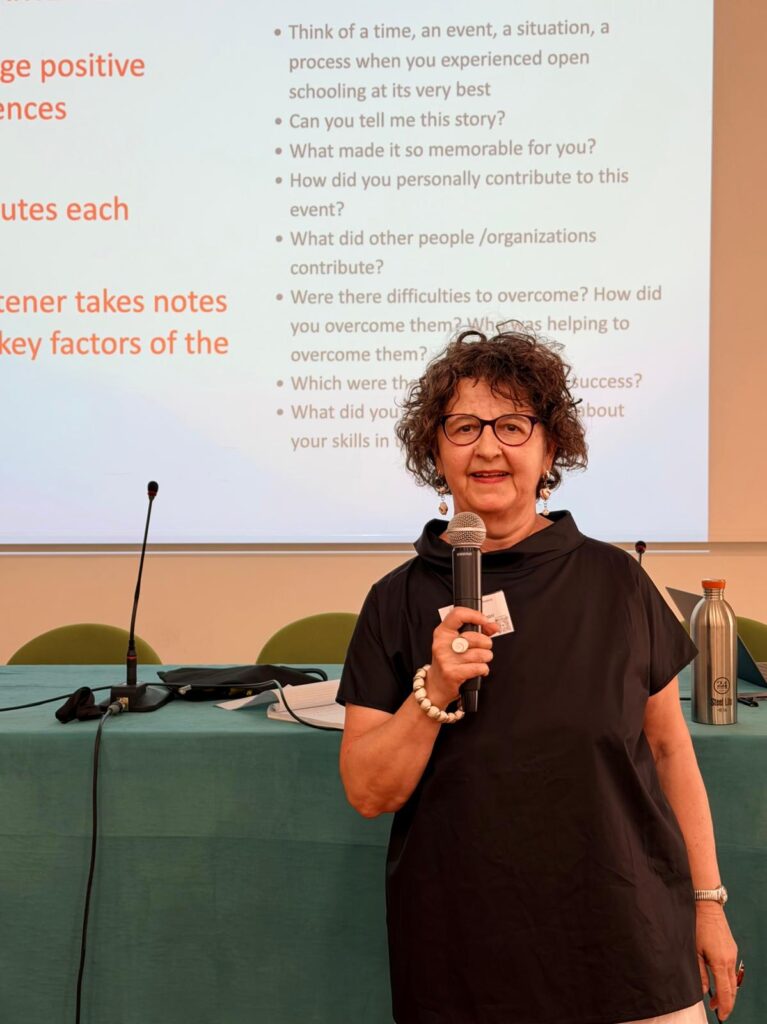
This shared practice shifted attention towards the present. Through the Appreciative Inquiry framework facilitated by Simonetta Simoni (Organisational sociologist, publisher and co-founder of Format.bo), the groups looked for what gives life to a community: relationships, initiatives, knowledge and capacities, including informal and less visible contributions. Appreciative Inquiry made the framing of the situation part of the work. In complex contexts, the questions a community asks shape what becomes visible and which possibilities can develop. Asking where cooperation, initiative, and care were already at work brought existing capacities and less visible actors into the common picture. The present became a field in which emerging possibilities could be noticed and strengthened. Images of the future influence how the present is lived, while inquiry and change unfold together. Bringing these possibilities into view therefore opened new space for action. Open-schooling took shape here as a process that grows by valuing what is alive in a community and allowing it to develop.
Photo by Angela Morelli
Photo by Alfredo Jornet
Living a poetically and politically a place: exploring Bertinoro and imagining new “borgos”
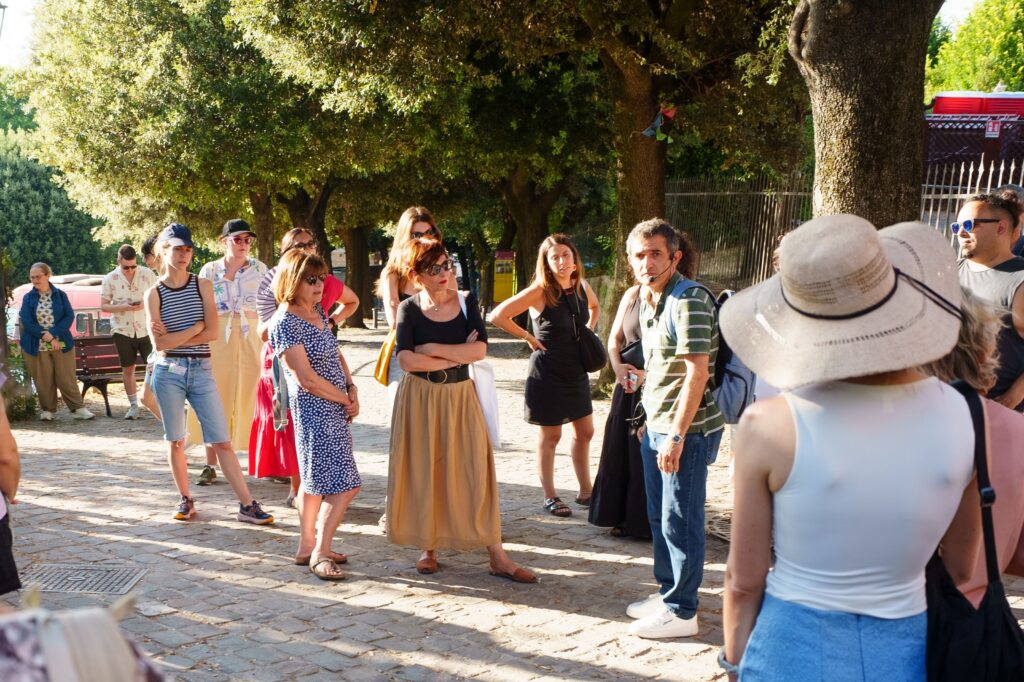
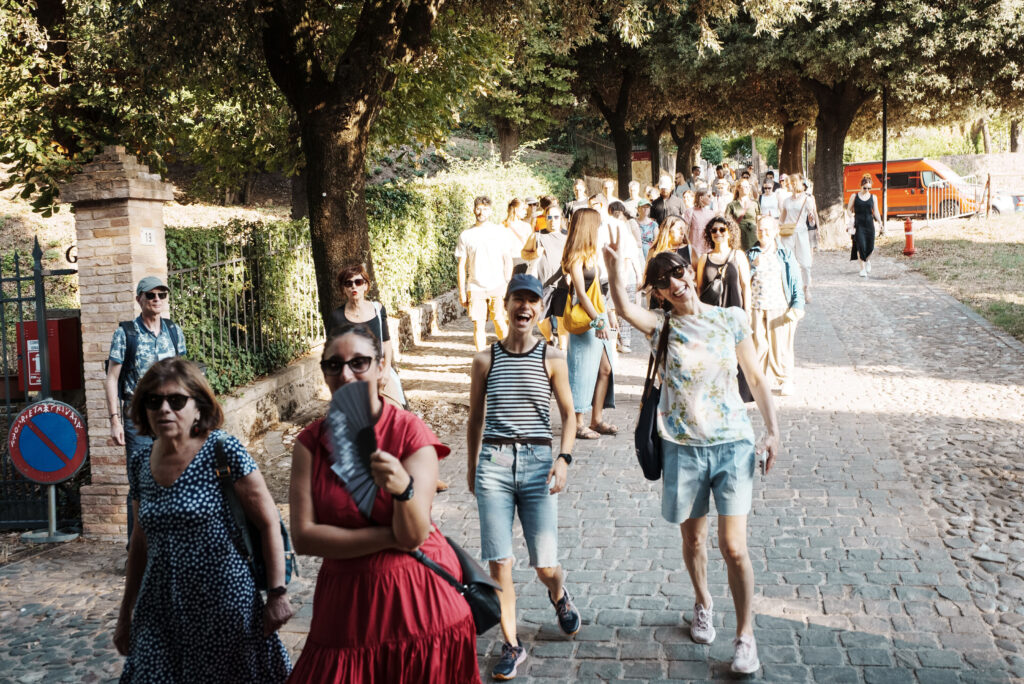
The open-schooling making process became even more “open” during the walk through Bertinoro with the local guide Ivan Severi, who grounded this perspective in the town’s history and streets: from the Colonna dell’Ospitalità (hospitality column) around which there are traditions and stories of welcoming travelers and strangers, to the civic agreements and stories attached to the different buildings revealed a place shaped through centuries of collective choices. Living together appeared to be an ongoing practice of negotiating responsibilities, preserving memory, and renewing institutions. Bertinoro showed how a community can maintain its identity through continuous reinterpretation.
Photo by Alfredo Jornet
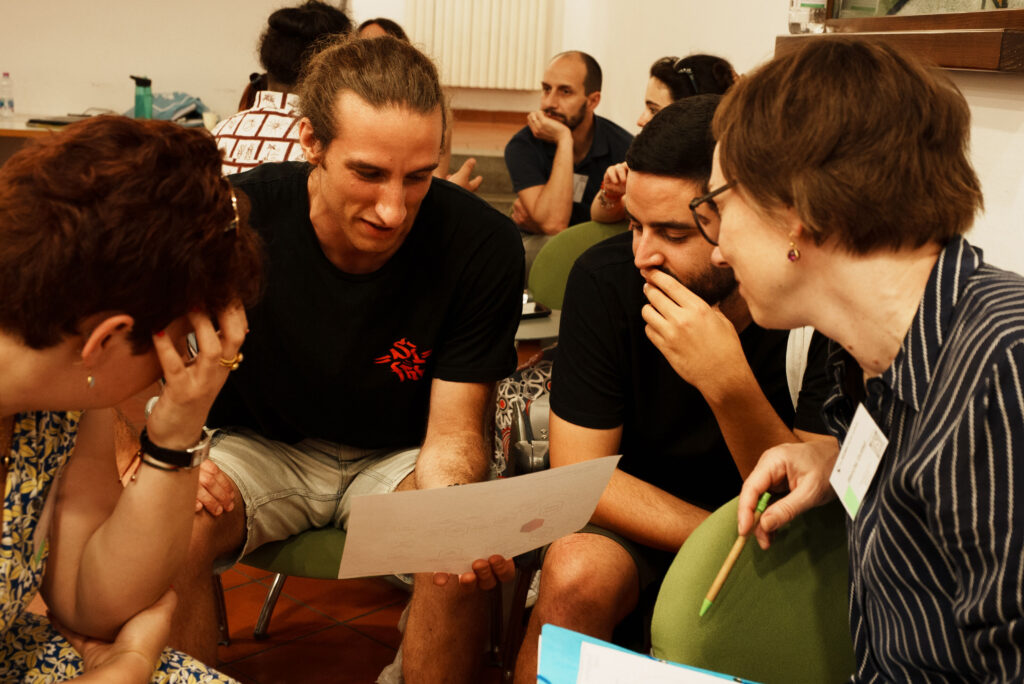
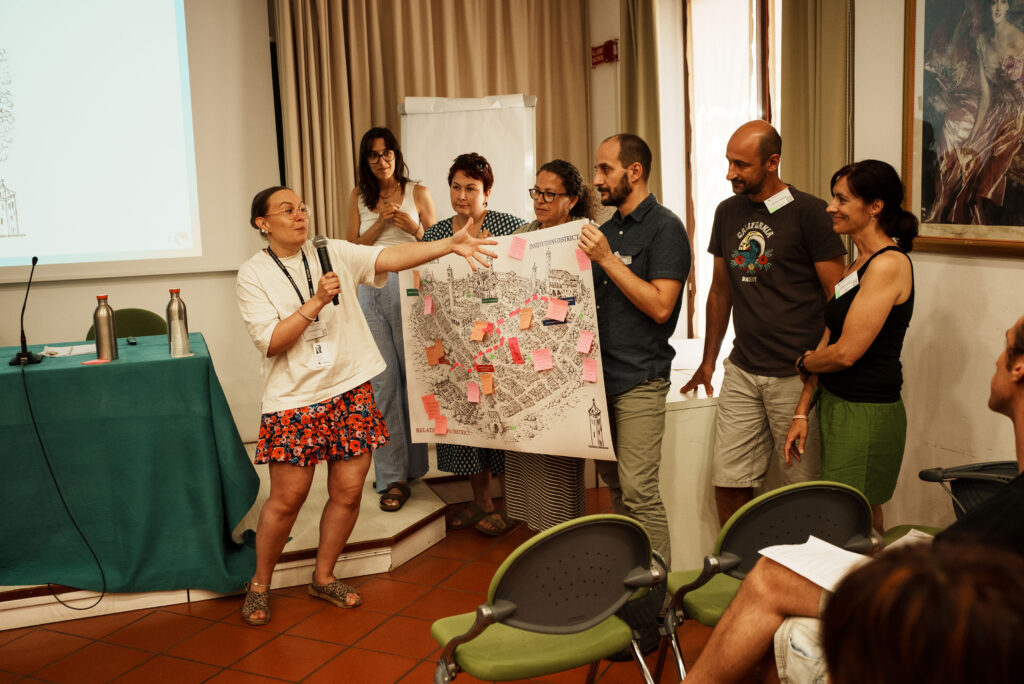
The collaborative work that followed drew on Bertinoro’s history and social fabric to envision desirable futures for Open-schooling. Its traditions of hospitality, civic agreements and shared spaces offered concrete references for the forms of participation and responsibility that could sustain those futures. Across countries, school levels and disciplines, the five Open Schooling Networks gave collective form to Open Schooling as a living ecosystem, each with an identity, a memory, and a capacity for renewal shaped by those who inhabit it.
This process was put into practice through the “Imagine the FEDORAS Borgo” activity, in which different groups were asked to create a fictional city in which community, education, and social values would be at the centre.
Photo by Alfredo JornetPhoto by Alfredo JornetPhoto by Alfredo Jornet
Final moments and remarks from the experts
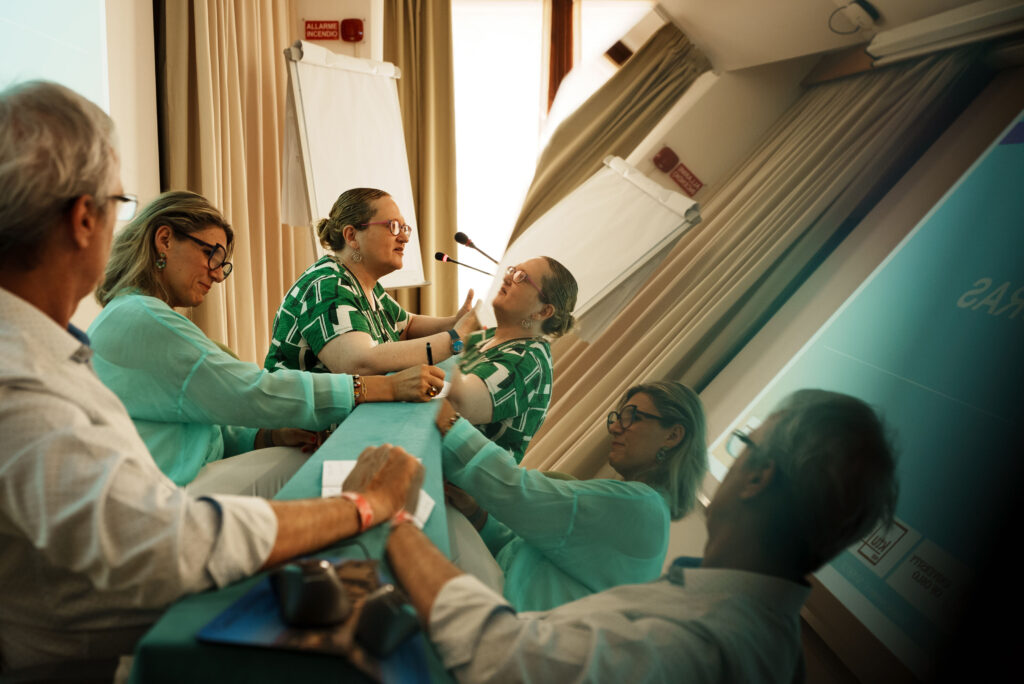
At the end of the week, the Advisory Board returned to the process through three connected perspectives: time and imagination, value and evidence, and the contexts in which change takes form.
Sibel Erduran gathered the movement of the week through a series of shifts in gaze: staying with problems long enough for their complexity to become visible; approaching evaluation systemically; attending to appreciation and belonging; and learning to remain with uncertainty. Together, these shifts gave form to the FEDORAS Teacher Academy as an Open Learning Network: shared enough to sustain a common direction and open enough to remain responsive to the experiences, questions and practices. The metaphors carried from Bertinoro—compromise, dialogue and the gap between reality and dreams—gave expression to the tensions through which Open-schooling continues to develop, including those between accountability and innovation, individual and collective assessment, and emerging practices and the conditions needed to sustain them. Questions about how imagination can be supported, who participates in assessment, and what human capacities enable a learning community to create, adapt, and collaborate kept the future connected to the realities through which it must be made. Sibel’s closing words, “hope and joy in imagining a better future,” left open-schooling in the making grounded in the present and open to the possibilities that communities might create together.
One of the questions left open concerned assessment itself: what does an educational community recognise as valuable, meaningful and worthy of attention? Stefania Bocconi (Researcher at CNR’s Institute for Educational Technology in Genoa) located this question within the values that shape what counts as evidence. The assessment culture taking shape within FEDORAS sought to make visible forms of learning, relationships and institutional change that often remain unrecognised, while examining the values that shape what counts as meaningful evidence. Open-schooling could be understood as an epistemological act: connecting schools with communities, non-formal spaces and disciplinary boundary zones reshapes what counts as knowledge and who contributes to keeping an educating community alive. Tensions across disciplines, values, institutional constraints, and transformative actions became features of a living ecosystem that required attention and care.
The reflections of Mauricio Pietrocola (Professor at the University of São Paulo) added a situated dimension to this way of seeing and acting. Open-schooling develops as shared purposes are translated in relation to the demands, interests and institutional conditions encountered in schools. These conditions shape what can be attempted and how teachers understand their professional roles as change unfolds. This work also depends on whose experience enters the common picture. The voices of students and families, together with the emotions of teachers and researchers, shape how change is understood. Open-schooling in the making appeared here as a common orientation that acquires meaning through the conditions and experiences of those involved.
Photo by Alfredo Jornet
Taken together, these reflections brought into view an emerging grammar of Open-schooling: attention to what gives life to a community, imagination as a capacity to open desirable futures, an assessment culture that questions what is recognised as valuable, and sensitivity to the contexts in which these possibilities take shape. Bertinoro became part of this grammar: its places, memories and civic practices helped the five networks see how shared purposes acquire meaning through participation, responsibility and care. The Summer School ended with Open-schooling still in the making, ready to continue in the communities, schools and networks to which participants returned.
Photo by Alfredo JornetPhoto by Alfredo Jornet
Throughout the week, a photographic portfolio was produced, several short video clips were created, and the presentations were recorded.
On Tuesday, 7 July 2026, the FEDORAS project held its first symposium, “Regenerating Science Education for a Sustainable World: Interdisciplinarity, New Languages, and Futures Thinking...
On the 10th of July, the Italian Institute for the Future (IIF), one of the leading Italian institutions focusing on futures studies and futures literacy,...
On 28 April 2026, teachers, researchers, school leaders and project partners from FEDORAS and the five Open Schooling Networks gathered for the first International Change...
08.05.2026
AUTHOR: Olivia Levrini Professor in Physics Education and History of Physics, University of Bologna
On May 7th, 2026, Olivia Levrini was invited to present the FEDORAS Academy project at the first Annual Meeting of the ISLE Academy project, Collaborative...