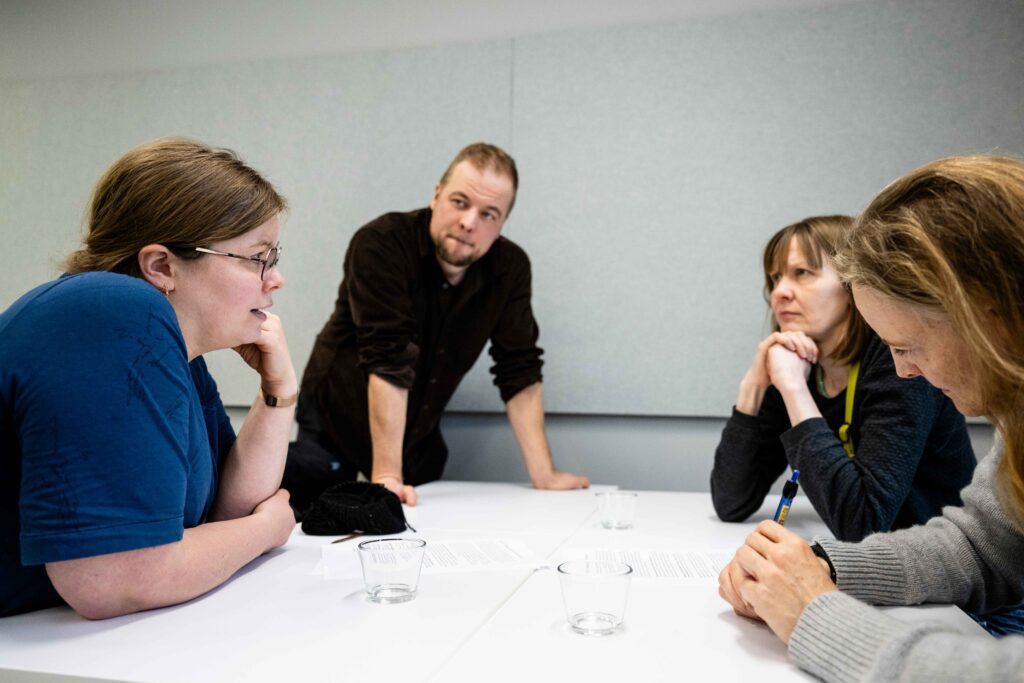
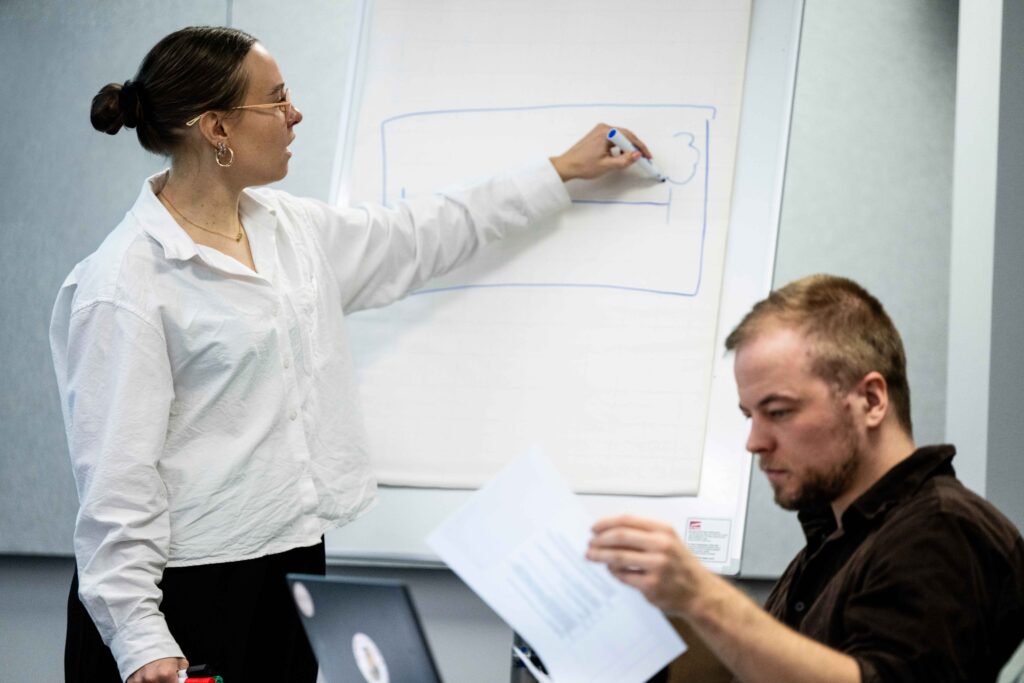
On January 27, the Finnish Open Schooling Network gathered for its first onsite Change Laboratory at the University of Helsinki. The Change Laboratory was a continuum for three online meetings held in autumn 2025. As organisers, we were excited to finally meet our network teachers face-to-face and have a whole day workshop together. The Change Laboratory gathered thirteen in-service science teachers from the Helsinki metropolitan area and three researchers from FEDORAS Academy to explore the meaning of socially impactful science education.
The central theme of the workshop was chosen to spark a broad and honest conversation about the role of science education and science teaching in society today. The theme combined FEDORA recommendations for future-oriented science education (Laherto et al. 2025) with the European Commission’s competencies for sustainability education (Bianchi et al. 2022). The agenda for the day contained theoretical backgrounding, practical workshops, discussions, and co-development of school-based experiments.
To begin the day, participants shared their initial thoughts and feelings related to the socially impactful science education. This grounding exercise opened a reflective space for our community of inquiry where different experiences and expectations could co-exist. To outline the common goals for the day, researchers then introduced a new visual FEDORAS framework in order to help the participants situate science education within research-based premises and a dynamic societal context in which the science education is developed and evaluated.
Teachers showed particular interest in how the FEDORA pillars and GreenComp are conceptualised. During the introduction, a lively discussion emerged around the balance between adopting “new languages” of science education versus preserving the accurate knowledge and terminology central to the scientific discipline and school science.
The morning continued with two workshops designed to widen participants’ understanding of what socially impactful science education can look like. The workshops combined previously tested materials and new try-outs.
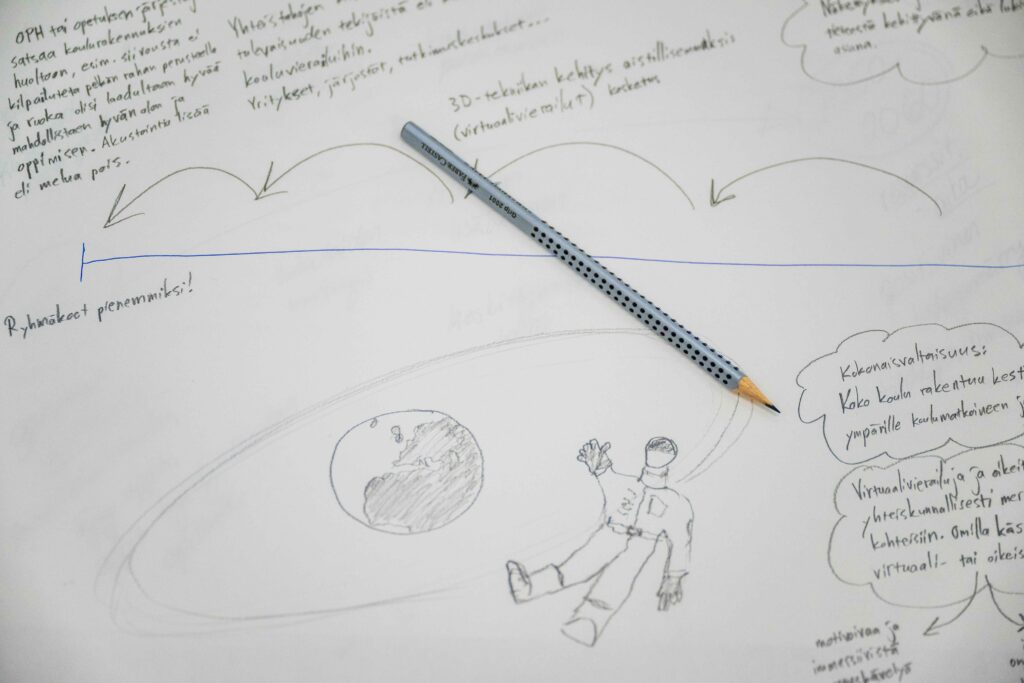
In the first session, teachers engaged in a future visioning activity that was modified for the workshop from Scenario development and Backcasting -activities (available in the FEDORAS material repository) developed in the I SEE -project and from a Conscious Future Visioning -exercise presented in a Workbook of Planetary Teaching and Learning (Holma et al. 2025). The participant listened to a guided narrative that sparked personal mental imagery and then, in small groups, created a shared vision of the future. Using the Backcasting method, each group then mapped out the steps needed to move from the present toward their collective future. The groups were offered inquiry questions that guided them to think about the future from the perspectives of epistemic, social, and institutional dimensions. Differences in desires were welcomed, and contradictions were suggested to take as a productive starting point rather than barriers for meaningful future visions.
The second workshop focused on controversial socio-scientific issues. Teachers explored two ethically complex scientific topics, climate engineering and biochemistry of antidepressants, guided by a brief learning material and socioscientific inquiry questions. The participants were asked to express and discuss their values in relation to the tensions in the learning materials and engage in open dialogue with a small group. The goal was to reconnect with deeper questions about how science, society, and ethical and epistemic uncertainties entangle, and to situate science education within this complexity.
After lunch, the Change Laboratory shifted to hands-on co-development of school-based implementations. Guided by inquiry questions, teachers examined their local implementation plans through three lenses: epistemic-cognitive, socio-relational, and institutional. Teachers shared their tentative plans and gave each other concrete feedback from both FEDORAS perspectives and their own discipline-based classroom experience.
One highlight of the day was hearing a real-life example from a school that had already piloted an innovative experiment during an online meeting in the autumn period. One of the participating teachers presented a whole-school film festival featuring sustainability documentaries. The event brought together teachers and students to view a collection of documentaries offering a variety of perspectives on current sustainability issues around the world. During the Change Laboratory, the teacher began brainstorming how the idea could be extended, for example, by adding elements of future visioning and utopian-led action plans to the next round of implementation.
The day closed with individual reflective writing followed by a collective discussion. Participants shared emerging insights and formulated new inquiry questions to guide upcoming meetings. Participants reflected, for example, on how we could increase our ability to dream about the future without immediately being confronted with a lack of resources and how we could gain a better understanding of how students understand the word ‘science’ in the school and everyday context.
References:
European Commission. Joint Research Centre. (2022). GreenComp, the European sustainability competence framework. Publications Office. https://data.europa.eu/doi/10.2760/13286
Holma, S., Laininen, E. ja Joutsenvirta, M. (toim.). (2025). Planetaarinen opettajuus ja oppiminen – työkirja kestävän tulevaisuuden rakentajille. Itä-Suomen yliopisto, Jatkuvan oppimisen keskus.
Laherto, A., Rasa, T., Miani, L., Levrini, O., & Erduran, S. (2023). Future-Oriented Science Education Building Sustainability Competences: An Approach to the European GreenComp Framework. In X. Fazio (Ed.), Science Curriculum for the Anthropocene, Volume 2 (pp. 83–105). Springer International Publishing. https://doi.org/10.1007/978-3-031-37391-6_5
The Italian National Change Lab was conceived as a moment of encounter between two Open Schooling Networks, each grounded in a distinct research culture and...
On 24 February 2026, the Spanish Open Schooling Network gathered at Institut de Celrà (Girona) for its first official Local Change Lab within the FEDORAS...
The Greek Local Change Lab, held on Sunday, January 25th, 2026, at the “XENIA” Student Cultural Center in Rethymno, brought together a diverse community of...
The Norwegian Open Schooling Network (OSN) has been firmly established and has arranged four physical meetings at the University of Oslo. In meetings, teachers and...